

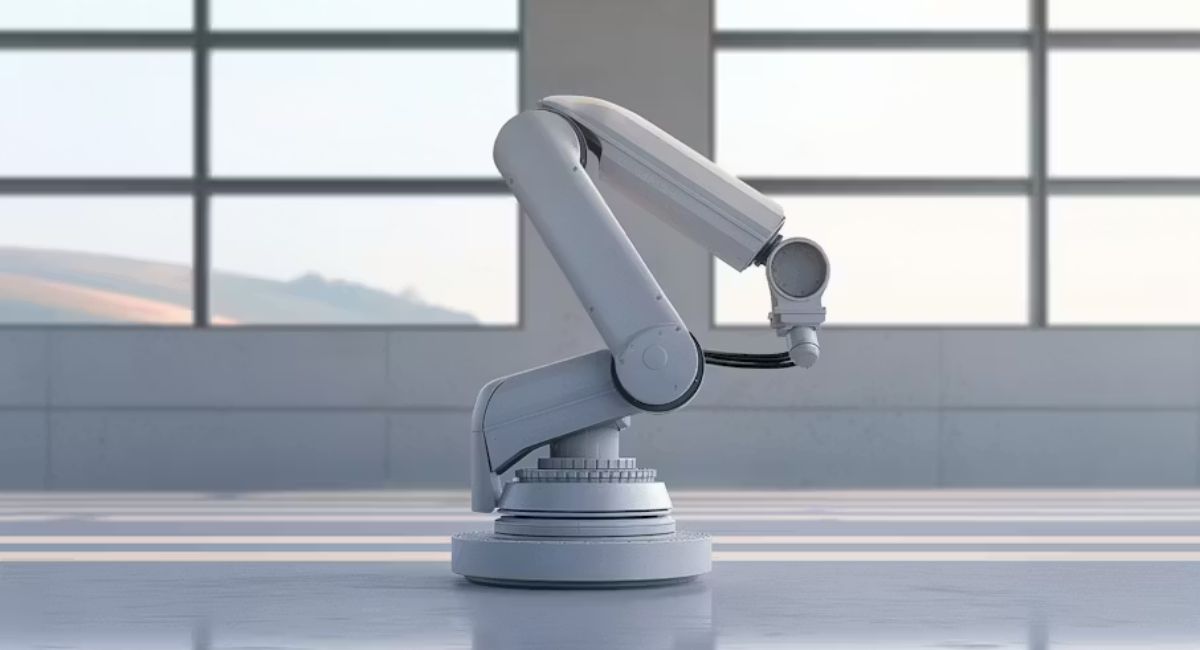
Robotic Arm Control System
Robotic arms are a fundamental pillar of modern automation, playing a transformative role in industries ranging from manufacturing and healthcare to logistics and scientific research. Behind every precise movement, smooth rotation, and accurate task execution lies a powerful robotic arm control system. This system acts as the intelligence layer that translates commands into controlled motion while ensuring accuracy, efficiency, and safety. As automation technologies continue to evolve, robotic arm control systems have become more sophisticated, adaptive, and intelligent, enabling machines to operate reliably in complex and dynamic environments.
Understanding Robotic Arm Control Systems
A robotic arm control system is a structured combination of hardware and software designed to manage the movement and behavior of a robotic arm. It processes commands from operators or automated programs, analyzes sensor feedback, and generates signals that drive actuators. The control system ensures that the robotic arm reaches the desired position, follows defined trajectories, and performs tasks with minimal error.
Rather than focusing solely on movement, control systems emphasize coordination, responsiveness, and adaptability. They ensure that robotic arms can function effectively under varying loads, speeds, and environmental conditions.
Why Control Systems Are Essential in Robotics
Control systems are the backbone of robotic functionality. Without them, robotic arms would be incapable of performing precise or repeatable tasks. In industrial environments, even a minor positioning error can lead to defective products, equipment damage, or safety hazards.
A robust control system ensures consistency, reduces operational risk, and enhances productivity. It allows robotic arms to perform repetitive tasks with high accuracy while adapting to unexpected changes, making automation dependable and scalable.
Core Elements of a Robotic Arm Control System
A robotic arm control system consists of several interdependent components working together as a unified structure. Controllers act as the central processing unit, executing control algorithms and decision-making processes. Sensors gather real-time data related to position, velocity, force, and environmental conditions.
Actuators convert electrical or hydraulic signals into mechanical motion, enabling joint movement. Software algorithms coordinate these components, forming a closed-loop system that continuously monitors performance and corrects errors to maintain precision.
Classification of Robotic Arm Control Systems
Robotic arm control systems can be categorized based on how they handle feedback and complexity. Open-loop control systems operate without feedback, executing predefined commands regardless of actual output. While simple and cost-effective, they lack accuracy and flexibility.
Closed-loop control systems incorporate feedback mechanisms that compare actual performance with desired outcomes. These systems adjust actions in real time, making them suitable for tasks requiring precision, adaptability, and safety.
Sensor Integration and Its Importance
Sensors are a critical component of intelligent robotic arm control. Position sensors monitor joint angles, velocity sensors track movement speed, and force sensors detect interaction forces between the robotic arm and its environment. Vision sensors add spatial awareness by recognizing objects and obstacles.
Through continuous data collection, sensors enable the control system to respond dynamically to changes such as load variations or unexpected interference. This capability is essential for applications that involve delicate manipulation or human-robot collaborationThe control system carefully regulates actuator behavior to ensure smooth acceleration, deceleration, and synchronization across multiple joints. Coordinated actuator control is crucial for achieving fluid and natural robotic motion.
Control Algorithms and Their Role
Control algorithms define how a robotic arm reacts to commands and feedback. Basic algorithms adjust movement based on positional error, while more advanced approaches use mathematical models to predict and optimize motion.
Proportional-integral-derivative control remains widely used due to its balance of simplicity and effectiveness. More advanced robotic systems employ adaptive and model-based algorithms that adjust parameters automatically, improving performance in unpredictable environments.
Kinematics and Motion Planning
Kinematics focuses on the geometric aspects of robotic motion, including joint positions, orientations, and trajectories. Forward kinematics determines the position of the end effector based on joint angles, while inverse kinematics calculates the required joint angles to reach a target position.
Accurate kinematic modeling is essential for precise control. Errors in kinematic calculations can lead to misalignment, inefficient movement, and reduced task accuracy.
Dynamic Modeling and Force Control
Dynamics considers the forces and torques acting on a robotic arm during motion. Factors such as inertia, friction, and payload weight influence how the arm behaves. A control system that accounts for dynamics can optimize motion efficiency and reduce mechanical stress.
Force control is particularly important in tasks involving contact, such as assembly or surgical assistance. By regulating applied force, the control system ensures safe and controlled interaction with objects and humans.
Feedback Mechanisms and System Stability
Feedback control enables robotic arms to maintain stability and accuracy. By continuously comparing desired motion with actual performance, the control system can correct deviations in real time.
Stability becomes increasingly important as robotic arms operate at higher speeds or handle heavier payloads. Well-designed feedback mechanisms prevent oscillations, overshooting, and unpredictable behavior.
Human-Machine Interaction Interfaces
Human-machine interfaces allow operators to interact with robotic arm control systems effectively. These interfaces may include control panels, graphical dashboards, or advanced programming environments.
A well-designed interface improves usability, reduces training time, and enhances operational efficiency. It also allows operators to monitor system status, adjust parameters, and respond quickly to faults or emergencies.
Safety Mechanisms in Control Systems
Safety is a fundamental requirement in robotic arm control, especially in environments where humans and robots work together. Control systems integrate safety features such as emergency stop functions, collision detection, and force limiting.
Advanced systems can identify abnormal behavior and initiate automatic shutdown procedures. These safety mechanisms not only protect workers but also build trust in robotic automation.
Integration with Industrial Automation
Robotic arm control systems are often part of a broader automation framework. Integration with programmable logic controllers, production management systems, and enterprise software allows coordinated and optimized operations.
This connectivity enables robotic arms to adapt to production schedules, quality standards, and real-time performance data, improving overall efficiency and flexibility.
Applications Across Industries
Robotic arm control systems are used in a wide range of applications. Manufacturing industries rely on them for welding, assembly, and material handling. Healthcare sectors use robotic arms for surgical assistance and rehabilitation.
Logistics and warehousing benefit from automated sorting and packaging, while research institutions use robotic arms for experimentation and prototyping. The adaptability of control systems enables robotic arms to excel in diverse scenarios.
Comparison of Common Control Approaches
The table below highlights commonly used robotic arm control approaches and their characteristics.
| Control Approach | Feedback Usage | Complexity | Typical Applications |
|---|---|---|---|
| Open-Loop Control | No | Low | Simple repetitive operations |
| PID Control | Yes | Medium | Industrial robotic systems |
| Adaptive Control | Yes | High | Variable and dynamic workloads |
| Model-Based Control | Yes | Very High | High-precision robotic tasks |
Challenges in Robotic Arm Control
Despite technological advancements, robotic arm control systems face several challenges. Sensor noise, modeling inaccuracies, and external disturbances can impact performance and reliability.
Real-time processing demands also increase as control algorithms become more complex. Addressing these challenges requires careful system design, accurate calibration, and continuous optimization.
Intelligent and AI-Based Control Systems
Artificial intelligence and machine learning are reshaping robotic arm control systems. Intelligent controllers can learn from experience, predict system behavior, and optimize performance without manual tuning.
These systems enable predictive maintenance, adaptive motion planning, and autonomous decision-making, bringing robotic arms closer to full autonomy.
Future Directions in Robotic Arm Control
The future of robotic arm control systems lies in enhanced intelligence, collaboration, and autonomy. Improvements in sensors, computing power, and AI will further refine control precision and adaptability.
Collaborative robots will rely on advanced control systems to ensure safe and seamless interaction with humans, expanding automation into new domains.
Significance of Robotic Arm Control Systems
Robotic arm control systems are essential for achieving precision, efficiency, and safety in automation. They enable machines to perform complex tasks consistently while reducing human workload.
As industries continue to evolve, these control systems will remain a driving force behind innovation and productivity.
Conclusion
Robotic arm control systems represent the intelligence that powers modern robotics. By combining hardware, software, and advanced algorithms, they enable robotic arms to operate with accuracy, stability, and adaptability.
As technology advances, these systems will become increasingly intelligent and autonomous, shaping the future of robotics and redefining the possibilities of automated systems.
 admin
admin